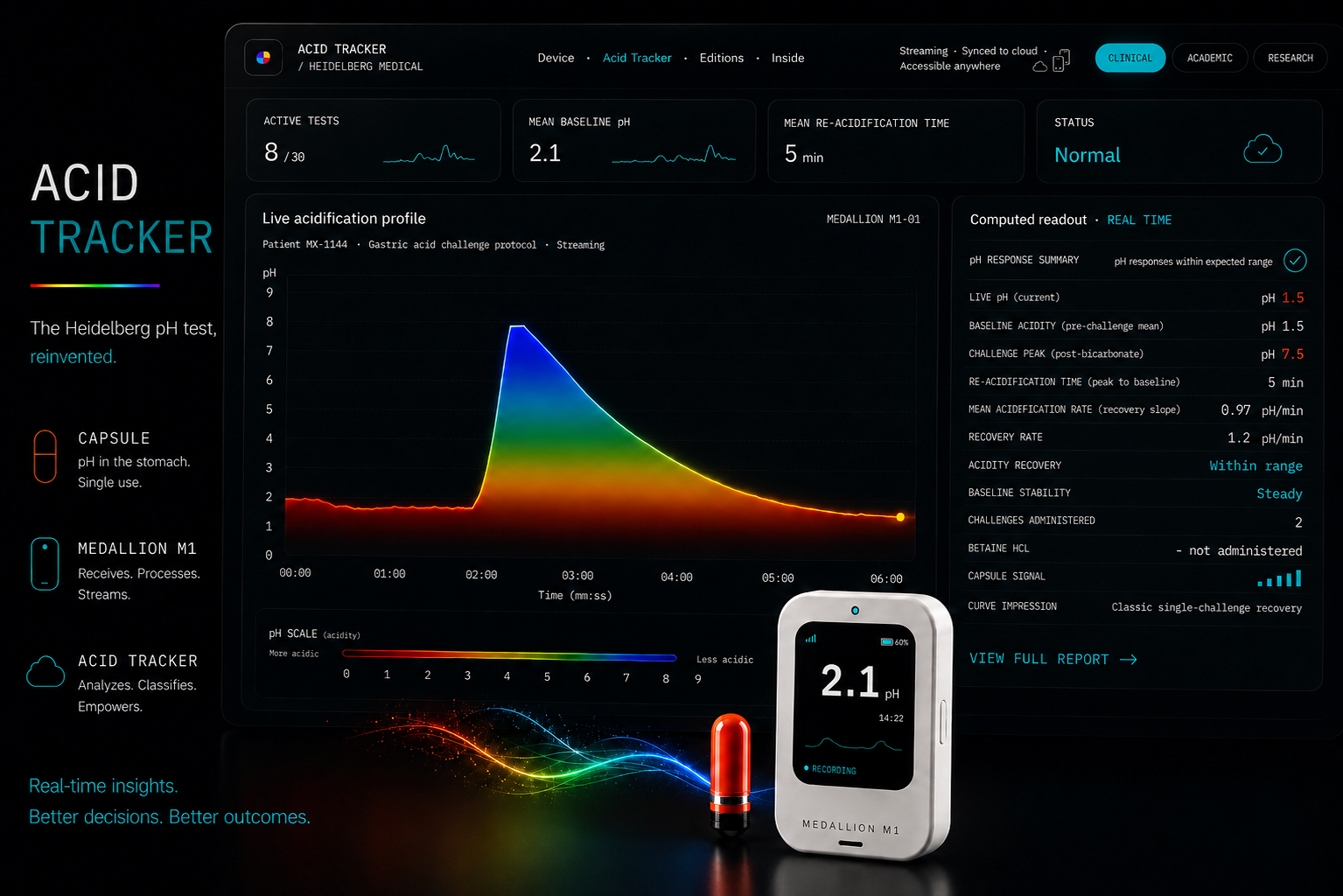
THE HEIDELBERG pH CAPSULE SYSTEM
Gastric acid,live.
A swallowed capsule reports intragastric pH continuously, in real time. A standardized bicarbonate challenge then shows how fast and how strongly the stomach recovers its acidity.
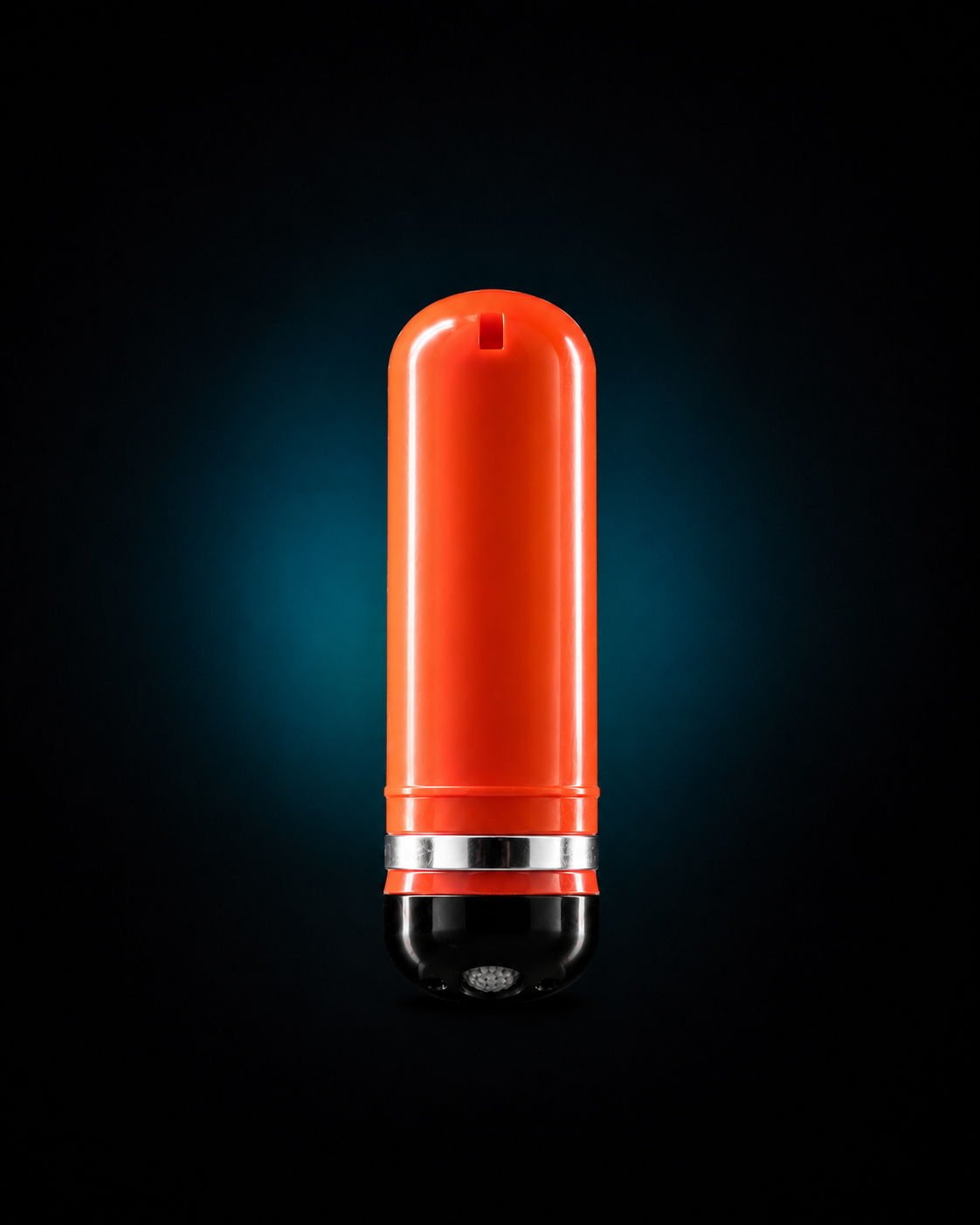
THE HEIDELBERG pH CAPSULE SYSTEM
A swallowed capsule reports intragastric pH continuously, in real time. A standardized bicarbonate challenge then shows how fast and how strongly the stomach recovers its acidity.
The capsule clinicians have trusted since 1964, now paired with a modern reader and a cloud platform built for how medicine works today. The same direct measurement, with a system to match it.
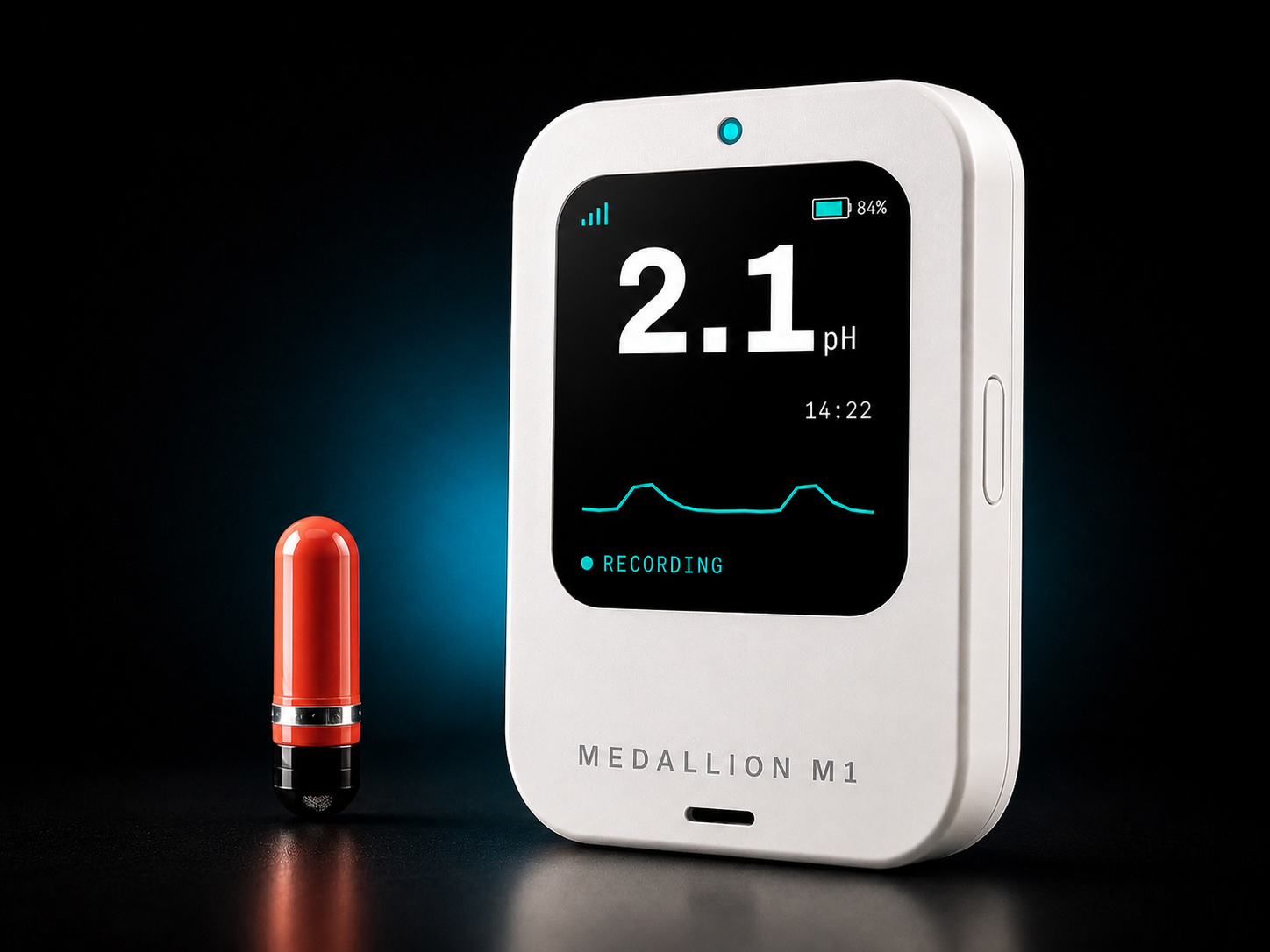
Unchanged. The proven measurement, exactly as it has always worked
The original reader, reimagined. A modern unit that streams pH in real time.
A cloud platform with advanced acid analysis and data you can revisit and compare.
Measure acid secretory capacity directly, before you prescribe, deprescribe, or work up malabsorption. A real reading of how the stomach makes and restores acid brings objective data to decisions usually made on inference.
Continuous luminal pH with a reproducible bicarbonate challenge in conscious, unsedated subjects. A standardized protocol for studying gastric acid dynamics, backed by six decades of peer reviewed literature and ready to extend with your own.
Intragastric pH as a pharmacodynamic endpoint for absorption and drug interaction studies. Capture the acid environment a compound actually meets, in real time and in conscious subjects, grounding formulation and bioavailability work in measured data.
Understand your symptoms, see how the test works, and find a provider near you. Everything is written for you, not your clinician, over at heidelbergtest.com, where you can learn what the test measures and why it matters.
The gastric H+/K+-ATPase transports protons against a concentration gradient of roughly three to four million to one between plasma and the parietal cell canaliculus. Sustaining that gradient is metabolically expensive: mitochondria occupy 30 to 40 percent of parietal cell volume, the largest mitochondrial content of any cell in the body. The Heidelberg system observes the functional output of that machinery directly — the luminal pH the pump actually produces — rather than inferring it from a serum surrogate.